
Plastic Free July
Every year, millions of people take part in Plastic Free July, a global challenge to cut single use plastic waste. In California, that mission is personal: much of that plastic ends up on the beaches and in the waters that define the state’s coast. Beaches intertwine with the lives of locals and tourists every day, and coastal communities have built their livelihoods around them. California coastal waters are also home to many marine species whose habitats are facing the consequences of human actions.
These pressures, combined with shifting ocean conditions, highlight the need for stronger, statewide monitoring to understand the extent and impact of plastics on our coast and marine life – and investment to ensure all Californians can safely enjoy the physical, mental, and cultural health benefits of clean, accessible beaches free of plastic.
Why Action Matters
Plastics have become widespread in California’s coastal environment. Stormwater runoff driven by rainfall is one of the major pathways delivering them into the ocean. During storms, rain flushes plastic fragments, synthetic fibers, tire wear particles, cigarette filters, and other debris from streets and gutters into storm drains, which discharge directly into rivers and coastal waters without filtration. Along the way, these plastics break down into smaller and smaller pieces, from macroplastics into microplastics and eventually nanoplastics.
Research compiled in OPC’s 2026 Statewide Microplastics Strategy: Report to the Legislature shows how widespread the problem has become. Microplastics have been found everywhere California scientists have looked, from the depths of our ocean, in marine life itself, and in California’s snowpack. Contamination is heaviest near coastal cities like San Francisco, Los Angeles, and Humboldt Bay, but it also turns up in remote, protected waters like the National Marine Sanctuaries along the Central and Northern coasts. Surveys of more than 80 California beaches confirm the same pattern: microplastics show up in beach sand nearly everywhere, most concentrated on urban beaches.
The smaller the particle, the more concerning it can be. Nanoplastics are fragments so tiny they can move through tissue, enter the bloodstream, and even cross the blood brain barrier. These particles, and their associated chemicals, are then ingested by marine species, raising concerns about health risks such as inflammation, oxidative stress, and the transfer of contaminants carried by plastic up the food chain, including to humans.
Microplastics travel from land based and sea based sources to their ultimate sinks (places where they accumulate), including beaches, ocean water, fish and wildlife, soil, sediment, freshwater, vegetation, and ice and snow. Source: California Ocean Protection Council, adapted from Saskia et al., 2022.
OPC’s Actions in the Fight Against Plastic Pollution
OPC is tackling the issue of plastic pollution from multiple directions. The 2018-2024 California Ocean Litter Prevention Strategy provided a coordinated framework for the state and public to prevent and reduce marine debris, with a strong focus on “turning off the tap” for land-based plastic pollution before it ever reaches the coast. The Ocean Litter Prevention Strategy Accomplishments Report, released this year, highlights progress made, including expanded cleanup and monitoring efforts, new policy actions to reduce single-use plastics, and stronger federal, state, and local partnerships. In 2022, OPC also adopted a first-of-its-kind Statewide Microplastics Strategy that recommends both early actions and research priorities to reduce microplastic pollution in California’s marine environment, setting a multi-year roadmap for foundational monitoring that is now underway. OPC, in partnership with the San Francisco Estuary Institute (SFEI), finalized a Statewide Plastics Monitoring Strategy and Planning Framework to create a long-term, coordinated roadmap for tracking both macroplastics and microplastics across freshwater, estuarine, and marine ecosystems, generating the data needed to establish baseline conditions, understand the impacts of plastics, and guide effective action to reduce this persistent pollution . In June, the Council approved $2.5 million to develop and implement a pilot statewide plastics monitoring program to advance those goals.
Producers are also being held accountable upstream, at the source. Senate Bill 54 (Allen, 2022), the Plastic Pollution Prevention and Packaging Producer Responsibility Act, shifts the burden of single use packaging and food service ware from consumers to producers statewide, requires covered products to be recyclable or compostable by 2032, and restricts the sale of expanded polystyrene (Styrofoam™) foodservice ware unless producers meet specified recycling rates. It also establishes the Plastic Pollution Mitigation Fund, which will direct $500 million a year for 10 years, for a total of $5 billion, toward addressing plastic pollution across the state, with a focus on overburdened communities. Regulations to implement SB 54 took effect May 1, 2026. Read more in OPC’s June 2026 Council meeting staff report on SB 54 and share your priorities for the Plastic Pollution Mitigation Fund (PPMF) through this survey and by visiting the PPMF webpage.
Get in on the Action
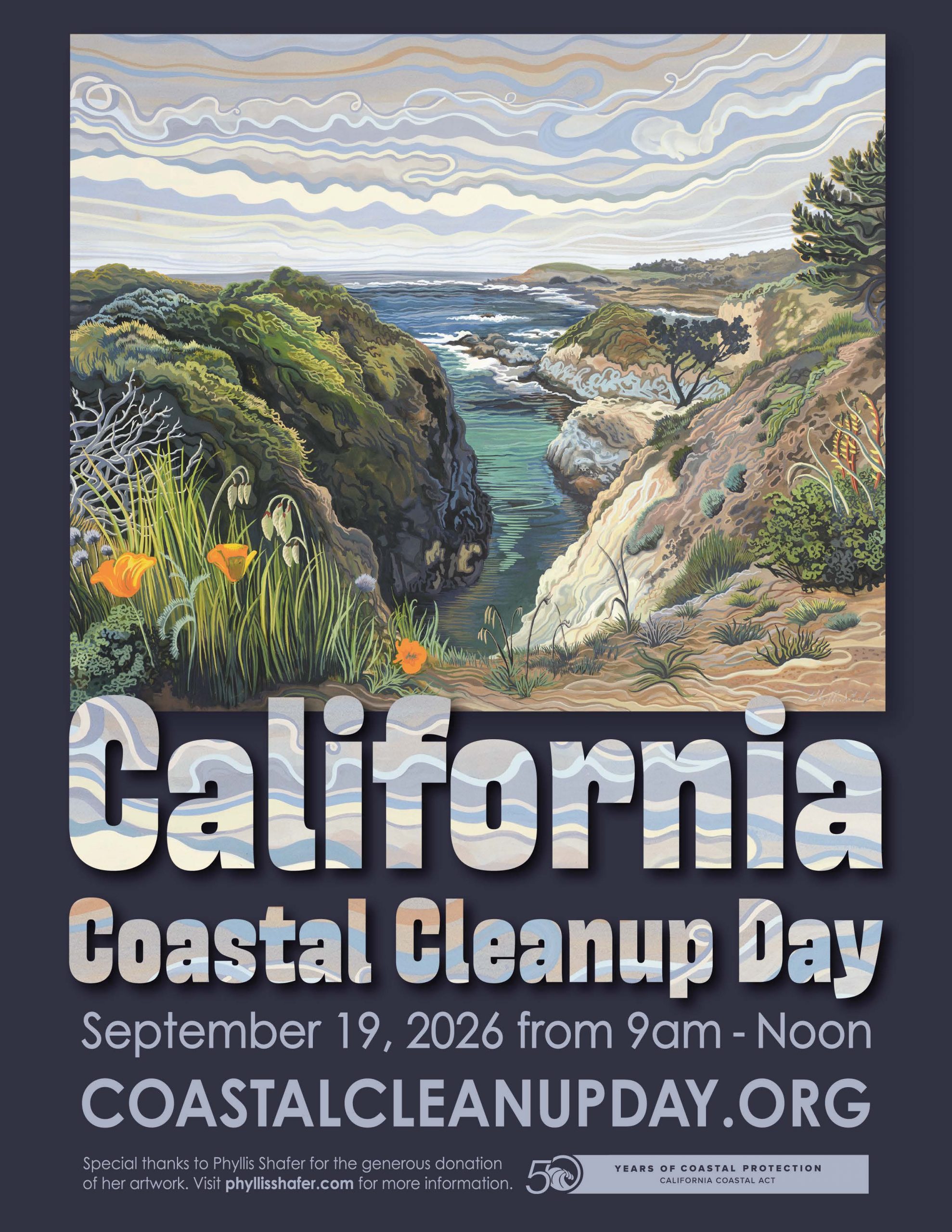
Last September, nearly 20,000 volunteers turned out for the 41st annual California Coastal Cleanup Day, hauling in more than 178,000 pounds of trash and recyclables from California’s coast and inland waterways in a single morning. The data volunteers collected shows the scale of the problem: roughly 75% of what’s picked up on Coastal Cleanup Day is plastic, and about 80% of it started out on land before ever reaching the water.
While California works to turn off the tap on plastic pollution at the source, through laws like SB 54 and strategies like the Statewide Microplastics Strategy, you can help slow the flow. This Plastic Free July, try a few simple habits. Skip single use plastic bags, bottles, and food ware in favor of reusables. Carry a reusable water bottle and utensils. Dispose of cigarette butts and packaging properly so they don’t wash into storm drains. And pick up litter when you see it, even miles from the coast, since it’s likely headed there the next time it rains.
This month is also a good time to mark your calendar. California Coastal Cleanup Day returns on Saturday, September 19, 2026. See you at the beach!