
Monthly Newsletter – California Coast and Ocean News – December
Jump to: What’s Happening | Funding Opportunities | Dive In (Article) | Project Highlight | Photo of the Month | Subscribe
What’s Happening
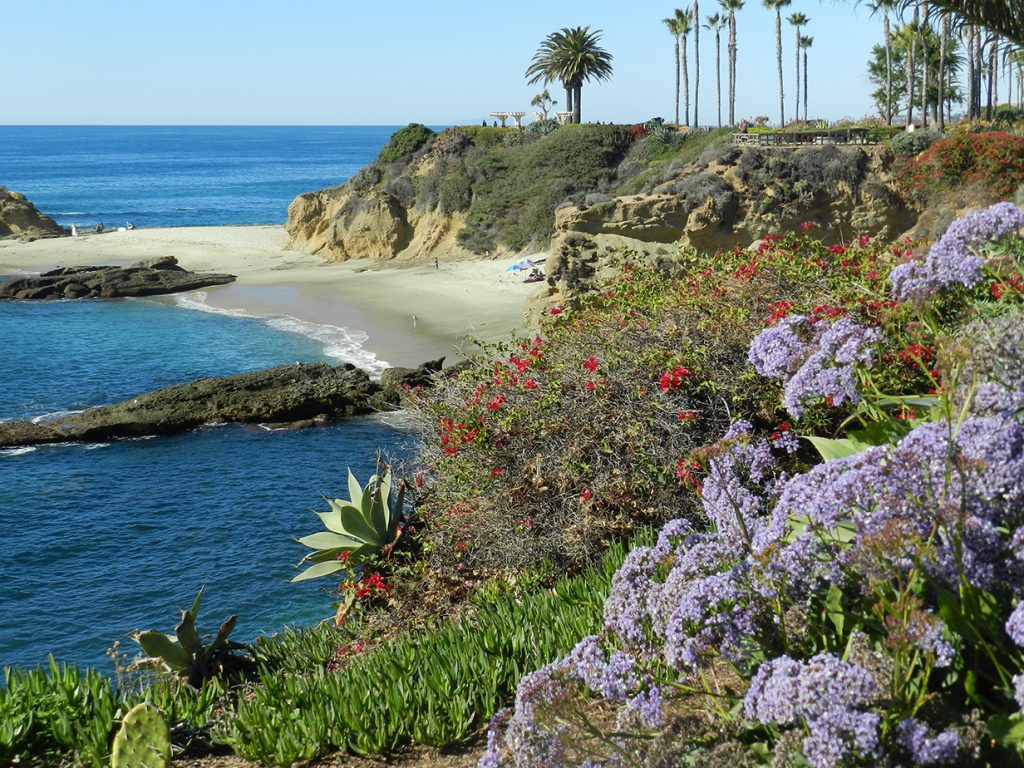
Ocean Protection Council Meeting Summary
At the December 9, 2025, Ocean Protection Council (OPC) meeting, the Council unanimously approved its 2026-2030 Strategic Plan: Safeguarding Our Coast and Ocean for All Californians to guide the Council’s investments and priorities through this decade. More than $7 million in investments were approved to directly support communities in preparing for sea level rise, advance responsible offshore wind research and monitoring, and to update the OPC Science Advisory Team to increase collaboration and scientific guidance with California’s scientific community and California Native American tribes. Each of these actions underscore the Council’s ongoing commitment to science, resilient communities, and a healthy ocean. Read the summary.
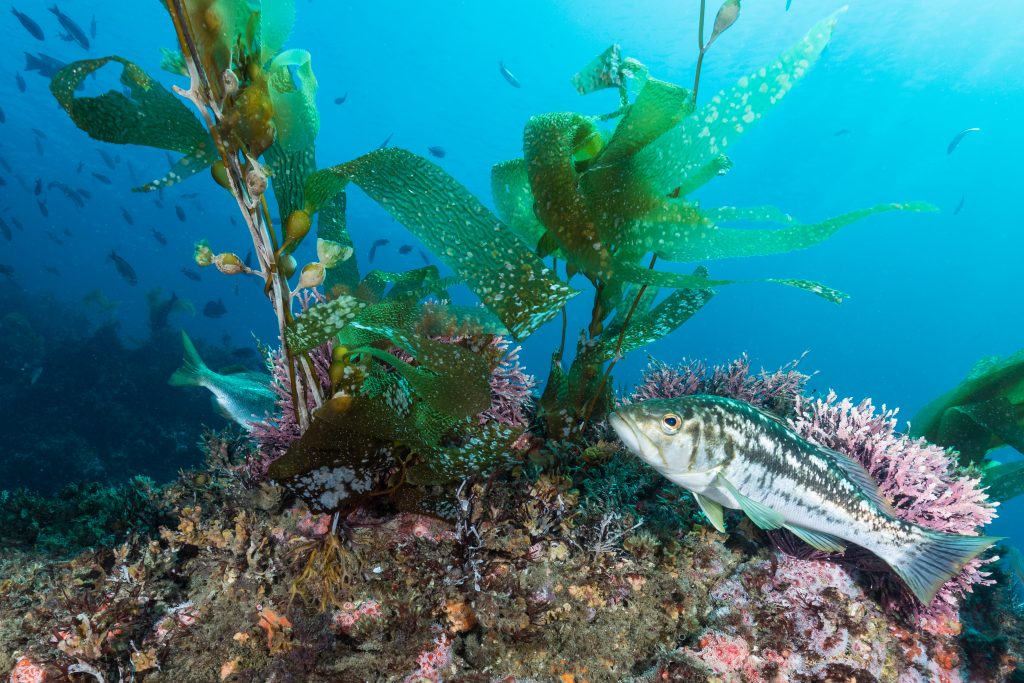
Call for Tribal Representatives on the Marine Protected Area Statewide Leadership Team – Nominations close January 13, 2026
The Marine Protected Area Statewide Leadership Team (MSLT) is seeking nominations for tribal representatives to serve on this important advisory body that supports the management of California’s Marine Protected Area (MPA) network. Learn more and submit an MSLT nomination.
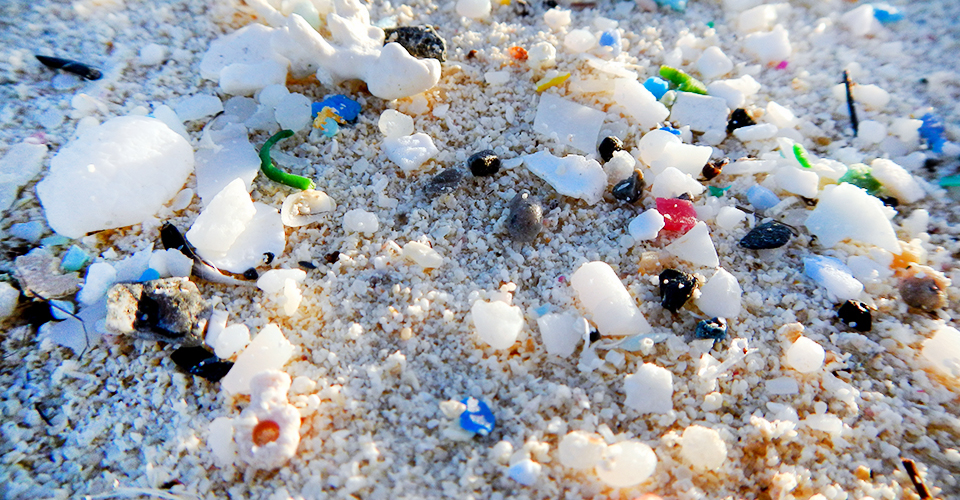
Webinar Recording: Microplastics Research Panel
OPC and California Sea Grant provided $1.9 million to fund five research projects addressing microplastics in California. Projects focus on either 1) improved understanding of aquatic microplastic contamination sources and ecological sensitivity, or 2) microplastic removal efficacy of low-impact development structural best management practices, also known as green infrastructure. A panel of Principal Investigators shared early findings for these projects in a recent webinar. Watch the microplastics research webinar recording.
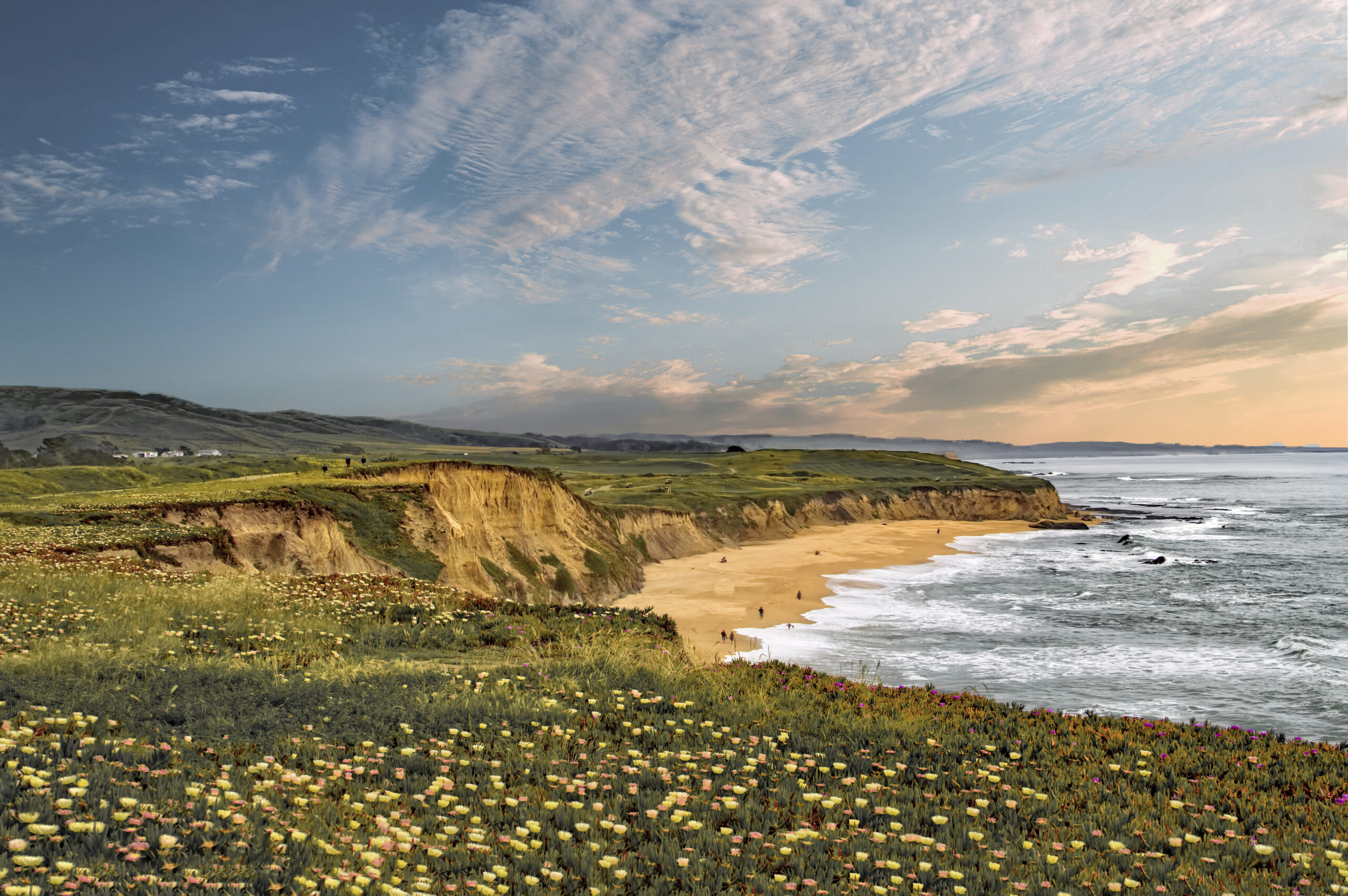
Webinar Recording: Coastal Habitat Mapping White Paper
OPC released a new Coastal Habitat Mapping Considerations White Paper, developed to explore options for statewide coastal habitat mapping efforts. The report offers recommendations for creating consistent, practical, and effective approaches to mapping California’s diverse coastal habitats. Read the white paper and watch the webinar recording.
Survey: Tracking Impacts of Federally Funded Programs on California’s Coast and Ocean
An ongoing survey is available to understand impacts to federally funded coast and ocean programs in California. Importantly, this survey will be used to identify critical environmental data and information gaps. Complete the survey.
Funding Opportunities
SB 1 Sea Level Rise Adaptation Planning Grant Program
OPC’s SB 1 Sea Level Rise Tribal Cultural Resources Funding Program’s next proposal deadline is Monday, January 5, 2026. This new funding opportunity will support California Native American tribes in assessing and planning for sea level rise impacts on cultural resources and ancestral lands.
The next submission deadline for Track 1: sea level rise adaptation planning projects is Friday, March 20, 2026. Learn more about the SB 1 Grant Program.
Dive In
OPC Adopts Strategic Plan to Safeguard California’s Coast and Ocean Through the End of the Decade
At the December 9, 2025 meeting, the Ocean Protection Council approved its 2026–2030 Strategic Plan: Safeguarding Our Coast and Ocean for All Californians, an ambitious blueprint that will guide the Council’s investments and priorities through the end of this decade. Building on OPC’s previous Strategic Plan and foundational advancements made during the Newsom Administration, this Plan clearly reflects what OPC heard in public meetings and tribal consultations across the state as it worked to develop the Plan over the last year—a call for healthy oceans, resilient coastal communities, a commitment to science, and a future where people and nature thrive together.
Project Highlight
Advancing Equity Along California’s Coast and Ocean
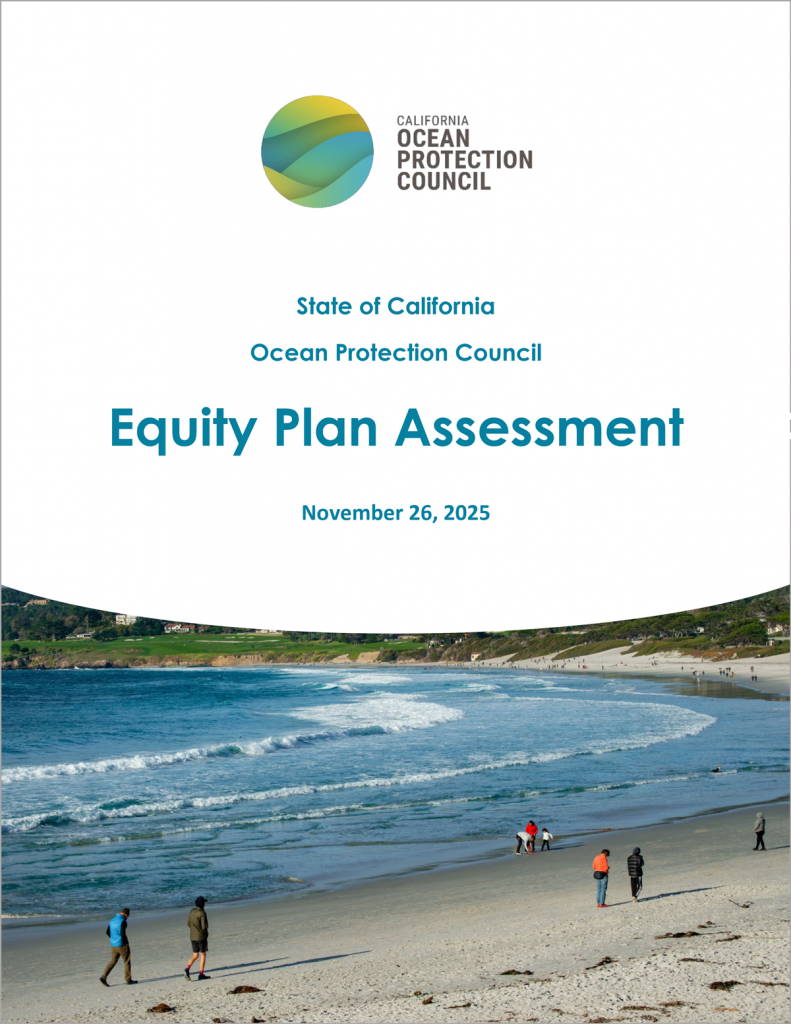
In 2022, the Ocean Protection Council (OPC) adopted its first-ever Equity Plan, establishing a framework to expand access, participation, and community benefits across California’s coast and ocean policies and programs. At the December meeting, OPC released its first Equity Plan Assessment, summarizing progress to date and priorities ahead for advancing equity, environmental justice, and collaboration with California communities and California Native American tribes.
The Equity Plan is guided by four interconnected goals that shape how OPC approaches community engagement, workforce development, policy design, and science, with an emphasis on community-led solutions, inclusive participation, and decision-making informed by diverse knowledge systems:
- Goal 1 – Equitable Engagement, Outreach, and Funding
- Goal 2 – Building an Inclusive Workplace and Workforce
- Goal 3 – Designing Equitable Coastal and Ocean Policy Making
- Goal 4 – Integrating Equity in Coastal and Ocean Science and Research
Examples of this work include OPC’s investments in tribally-led and community-informed science, such as support for the Tribal Marine Stewards Network, as well as funding for habitat restoration, workforce pathways, and community-based stewardship.
Between 2022 and 2024, OPC administered approximately $100 million in grants across its strategic goals. Nearly 45 percent of those funds supported projects with direct benefits to California Native American tribes, environmental justice communities, and other priority populations, helping reduce barriers to funding and expand access to state resources.
Developed collaboratively with partners and advisors, the Assessment marks an important milestone in OPC’s work to expand community benefits. Looking ahead, OPC will continue strengthening accountability and aligning priorities with its 2026–2030 Strategic Plan to support a healthy, resilient coast and ocean for all Californians.
Staff Spotlight
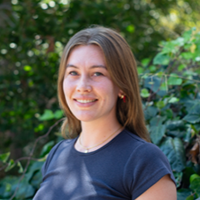
Fiona Vogler, Executive Fellow
Fiona (she/her) joined OPC as the 2025 Capital Fellows Executive Fellow. She earned her B.A. in Geography and Political Economy from UC Berkeley, where she studied applications of innovation in conservation with the Fung Fellowship and supported the Department of Toxic Substances Control’s legislative affairs office as a UC Berkeley Cal-in-Sac Fellow. After teaching English in Madrid, Spain for two years, she returned to Sacramento to continue supporting sustainable, equitable, and environmentally just climate adaptation and resilience efforts. In her free time, she enjoys spending time outside, traveling, watching movies with friends, and learning salsa.

“As the current Executive Fellow, I have had the privilege of seeing firsthand the breadth and impact of OPC’s work. From supporting microplastic monitoring and mitigation to elevating California’s leadership in marine conservation on the global stage, OPC is tackling urgent challenges with creativity and resolve. Coming from an interdisciplinary social science background, I am particularly excited about OPC’s convening of the Social Science Working Group to inform and advance future monitoring of California’s landmark marine protected area (MPA) network. The group brings social science expertise into ocean and coastal management by exploring human connections with marine environments and uplifting tribal knowledge systems. By deepening understanding of how communities value and interact with marine systems and leveraging those different relationships, OPC can develop stronger, more equitable ways of safeguarding the health and resilience of our coast and ocean and the communities connected to it. I look forward to continuing to learn from OPC’s efforts throughout my fellowship and beyond.”
Photo of the Month
Have a stunning shot of California’s coast or ocean? Submit a photo to be featured as the Photo of the Month! Whether it’s a serene shoreline, vibrant marine life, or a captivating coastal sunset, share the beauty of our state’s coastline through your lens! Submit your photo.
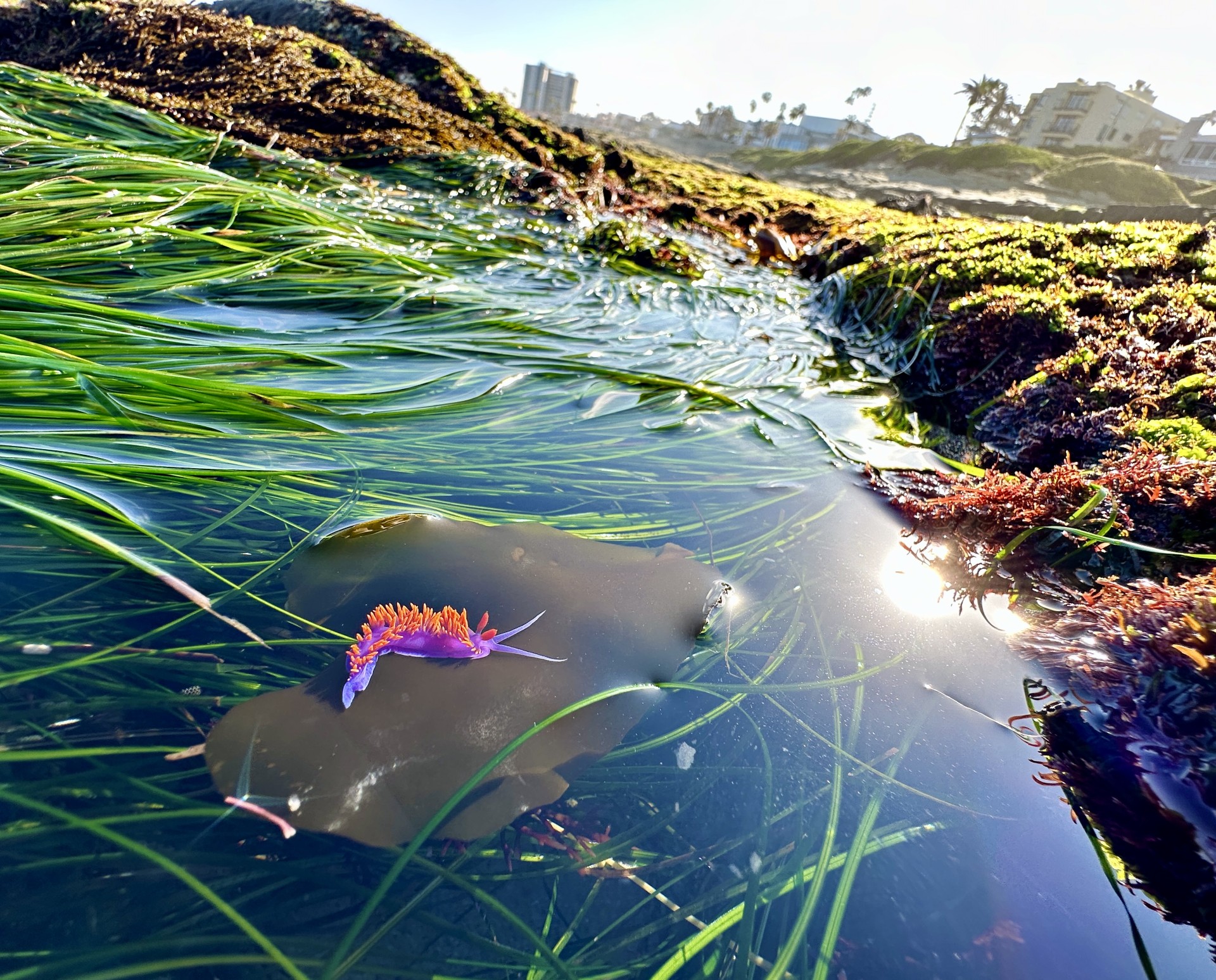
Photo of the Month: Nicky Rosenberg / Spanish shawl nudibranch in San Diego
To stay updated with OPC’s efforts, follow us on social media, and sign up for emails.