
California Beach Resiliency Plan
Safeguarding California’s Beaches for Future Generations
California’s beaches are facing serious challenges, from sea level rise and erosion to increased storm impacts and a shrinking sand supply due to development and hard infrastructure, such as seawalls and dams. The California Beach Resiliency Plan is a statewide effort to understand where our beaches are most vulnerable, what solutions may be possible, and how we can take action to protect them. The Plan is expected to be completed in 2027.
Led by the California Ocean Protection Council (OPC) and the UC Santa Barbara Ocean and Coastal Policy Center (OCPC), the Plan brings together a multidisciplinary team of scientists, planners, economists, and policy experts. The team includes the following partners:
- Charles Lester, UCSB OCPC
- Lilia Mourier, UCSB OCPC
- Ella McDougall, OPC
- Jenny Dugan, UC Santa Barbara
- Summer Gray, Jenny Dugan, UC Santa Barbara
- José Castro-Sotomayor, CSU Channel Islands
- Dan Reineman, CSU Channel Islands
- Kiki Patsch, CSU Channel Islands
- Kriss Neuman, Point Blue
- Sam Veloz, Point Blue
- Stephanie Coates, Point Blue
- Sean Vitousek, U.S. Geological Survey
- Teresa Romero, Strategic Earth
- Bri Goodwin, Strategic Earth
- Phil King, Ceto Consulting
- Sarah Jenkins, Ceto Consulting
The Plan will be organized into four main components:
- County-by-County Snapshots – profiles of local beach conditions, vulnerabilities, and trends
- Decision Guidance – tools to help local planners and managers evaluate adaptation strategies
- Policy Recommendations – options for statewide coordination and funding
- Integrated Components – drawing on geophysical, ecological, and socioeconomic data
Read the approved December 2023 OPC staff recommendation.
The Plan is being designed for a wide audience, from state policymakers and local planners to everyday beachgoers who care about the future of our coast.
Why This Matters
The Threat
Beaches across California are at risk. Without intervention, 24–75% of beaches could disappear by 2100 (USGS, 2023). Rising seas, erosion, and more intense storms are already reshaping the shoreline, and development has reduced sediment supply, making it harder for beaches to naturally replenish.
What’s at Stake
Losing our beaches would mean less public access and recreational space, degraded coastal ecosystems and habitats, and increased risks to coastal economies and community identity
Learn more about California’s sea level rise science and policy: OPC Sea Level Rise Webpage and the State of California Sea Level Rise Guidance: 2024 Science and Policy Update
What the Plan Will Do
Understand Beach Resiliency
- Assess the vulnerability of beaches statewide, including the San Francisco Bay.
- Analyze how sea level rise, erosion, and other climate threats affect beach systems ecologically, physically, and socially.
Guide Local Decision-Making
- Provide tools and guidance for planners to evaluate and prioritize beach adaptation strategies.
- Support alignment with state policy and help target funding and investments.
Deliver County-by-County Snapshots
- Offer localized beach profiles with trends, risks, and opportunities
- Help communities plan with regional data and beach-specific recommendations
Inform Statewide Policy and Coordination
- Recommend policies, investments, and governance strategies to support long-term beach resilience
- Share insights to improve coordination across jurisdictions and ensure beaches are managed as shared public assets
Stay Engaged
The Plan is underway with an anticipated completion in mid-2027. OPC will be hosting two public webinars in the near future, providing a chance to learn more, ask questions, and help shape the final Plan. Stay tuned for updates!
Staff Contacts

Ella McDougall
Senior Climate Change Program Manager (Specialist)
Ella.McDougall@resources.ca.gov
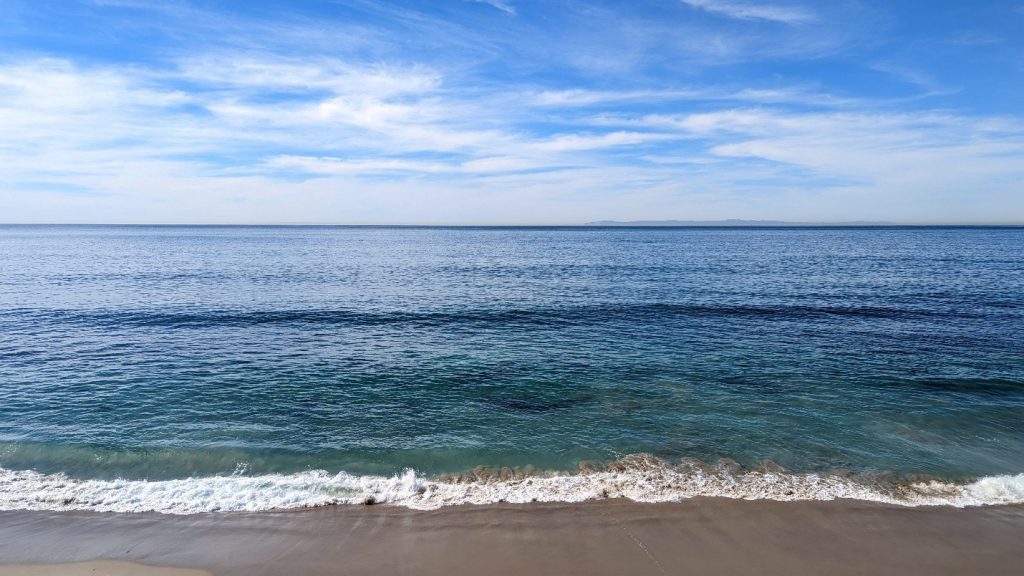
Dana Point – Stacy Hayden
Project Framework:
The Beach Socio-
Ecological System
(Lester et al., In press)
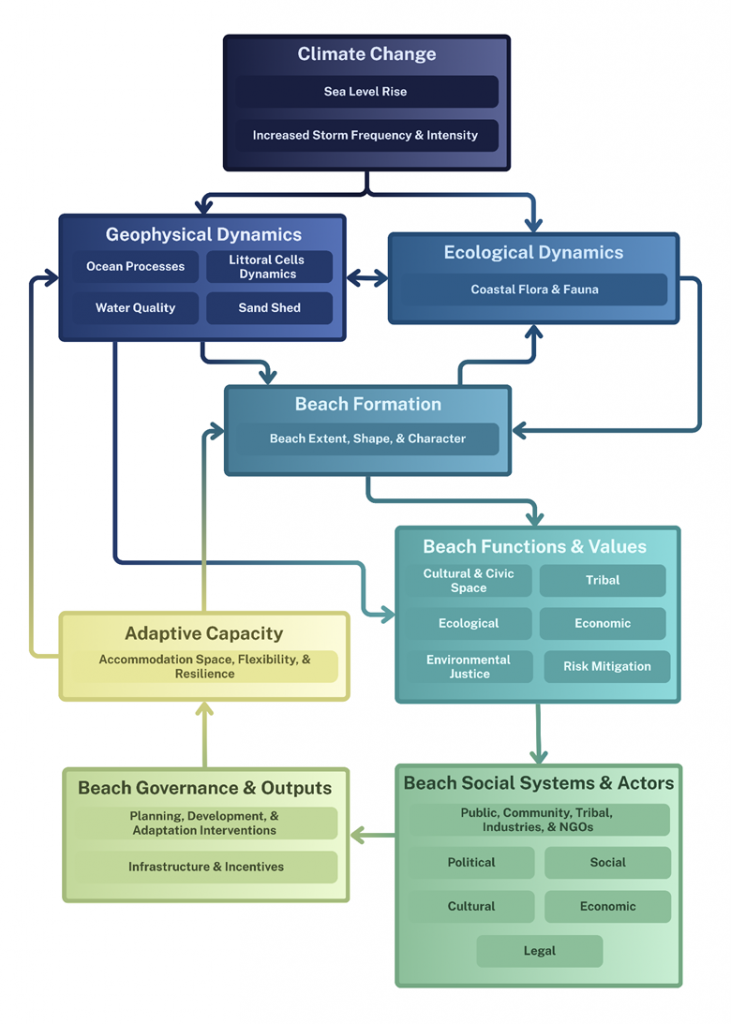
Click on image to expand.
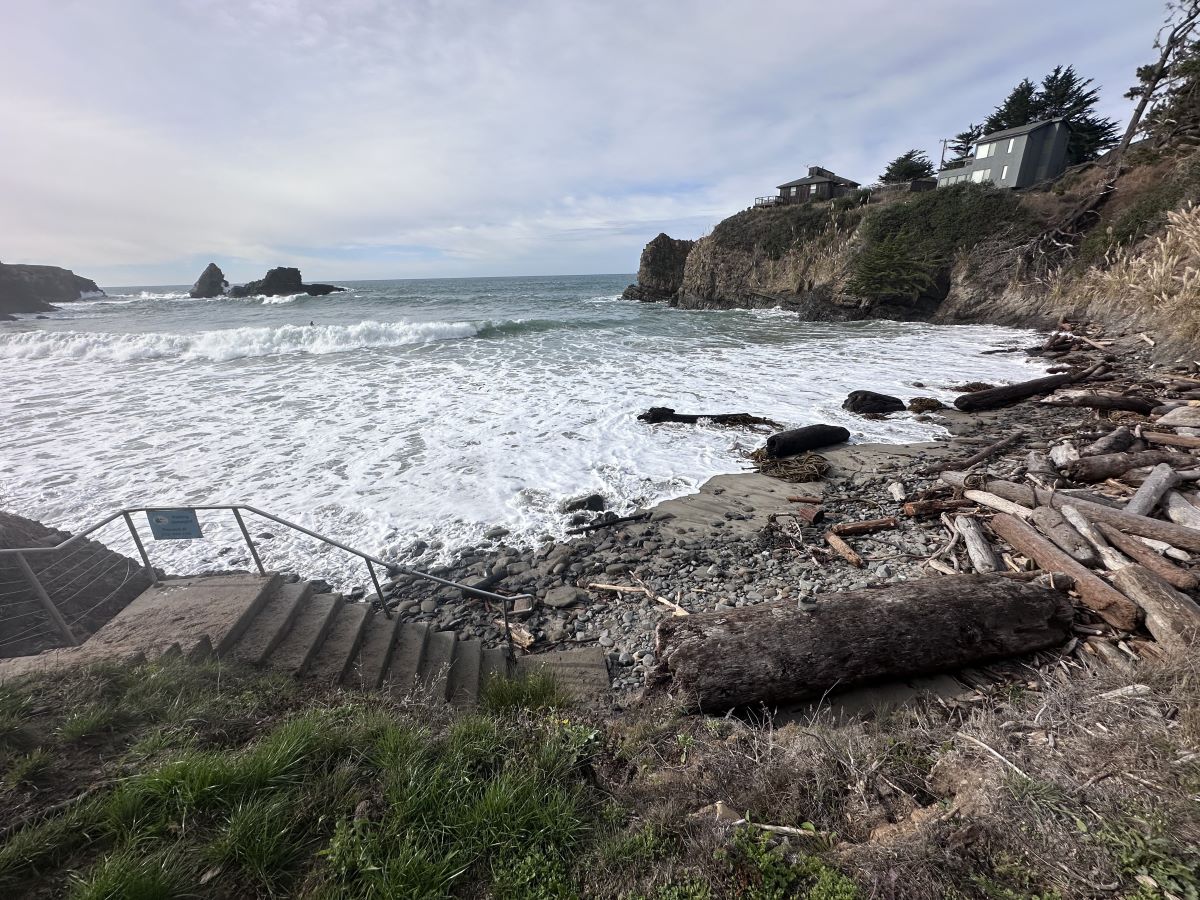
Gualala – King Tides Project